Your Complete Home Insulation Guide: Understanding and Improving Your Property's Thermal Efficiency
Keeping your home warm and comfortable whilst managing energy costs is a balancing act every UK homeowner knows well. Insulation sits at the heart of this challenge, yet it remains one of the most misunderstood aspects of property care. Whether you live in a Victorian terrace in Berkshire or a modern detached home in Buckinghamshire, understanding your insulation can transform how your property performs throughout the year.
This guide walks you through everything you need to know about home insulation, from identifying what you already have to making informed decisions about upgrades. You will learn how to spot problems, understand which improvements offer the best returns, and discover practical steps you can take yourself before calling in professionals.
How Heat Escapes from Your Home

Before diving into insulation types, it helps to understand exactly how homes lose heat. Heat naturally moves from warmer areas to cooler ones, and your property has multiple escape routes that work against your heating efforts.
The roof accounts for approximately 25 per cent of heat loss in an uninsulated home. Hot air rises, and without adequate loft insulation, that warmth simply drifts away into the atmosphere. Walls represent an even larger concern, responsible for around 35 per cent of total heat loss. This figure increases significantly in older solid-wall properties common across Berkshire and Buckinghamshire, where cavity wall insulation is not an option.
Floors contribute roughly 15 per cent of heat loss, particularly ground floors and those above unheated spaces like garages. Windows and doors account for about 10 per cent each, with single glazing and poorly sealed frames being the main culprits. Even draughts through gaps, cracks, and openings add up to meaningful heat loss over time.
Understanding these pathways helps you prioritise which areas of your home need attention most urgently. A well-insulated loft might give you less benefit if your walls are haemorrhaging heat, and vice versa.
Assessing Your Current Insulation
The first step in any insulation improvement project is understanding what you already have. Many homeowners in the South East live in properties with some insulation but have no clear picture of its condition or effectiveness.
Loft Inspection
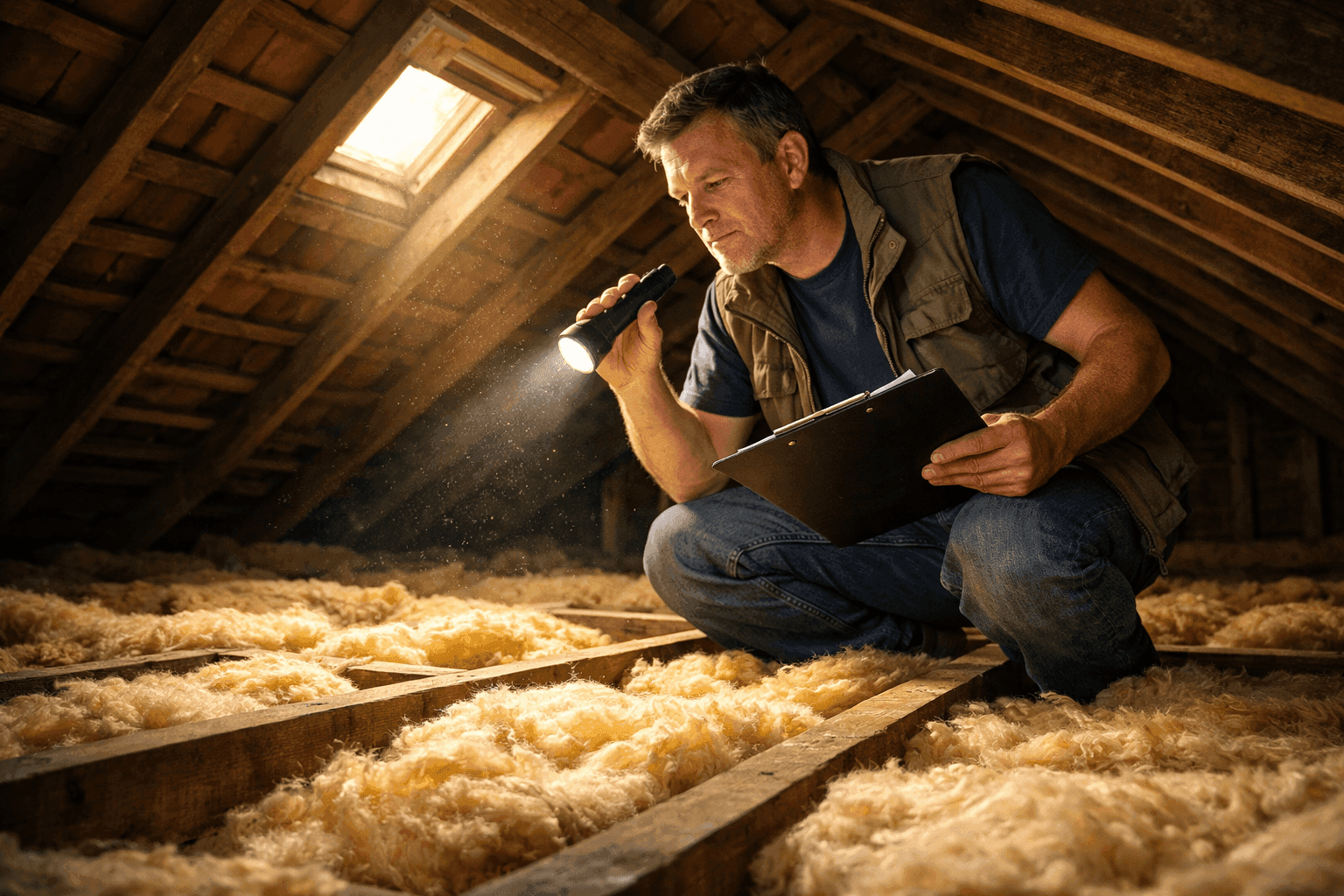
Start with your loft space, as it is the easiest area to check. Safely access your loft using a proper ladder and adequate lighting. Look at the condition of any existing insulation. Is it evenly distributed? Has it become compressed, damp, or patchy over the years? Measure its depth - current recommendations suggest 270mm of mineral wool or equivalent for optimal performance.
Properties built before the 1970s often have inadequate or no loft insulation, whilst those from the 1980s onwards typically have some provision, though often below current standards. Many homes in established areas of Berkshire and Buckinghamshire fall into this middle category, with well-intentioned but insufficient coverage.
Wall Assessment
Determining your wall type requires a slightly different approach. Cavity walls, common in properties built after 1920, have a gap between two layers of brickwork. You can often identify these by measuring wall thickness at a window or door opening. Cavity walls typically measure around 300mm, whilst solid walls are closer to 225mm.
Look at the brickwork pattern too. Cavity walls usually show a consistent stretcher bond pattern, with bricks laid lengthways. Solid walls often display a mix of stretchers and headers, with some bricks showing their short ends.
If your cavity walls are already insulated, you might find small drill holes that have been filled, typically at regular intervals across external walls. The Energy Performance Certificate for your property should also indicate whether cavity wall insulation is present.
Floor Evaluation
Suspended timber floors, identifiable by their slight bounce and often featuring airbricks in external walls at floor level, can be insulated but require careful consideration of ventilation. Solid concrete floors, more common in properties built after the 1950s, are harder to improve without significant work.
Check for draughts around skirting boards and floorboards, which indicate gaps that allow cold air to penetrate from below. In properties across Buckinghamshire and Berkshire, where clay soils can cause ground moisture issues, proper ventilation of suspended floors must be balanced against insulation needs.
Types of Insulation Materials Explained
The insulation market offers numerous materials, each with distinct properties, costs, and applications. Understanding these options helps you make informed choices whether you are tackling a project yourself or evaluating quotes from professionals.
Mineral Wool
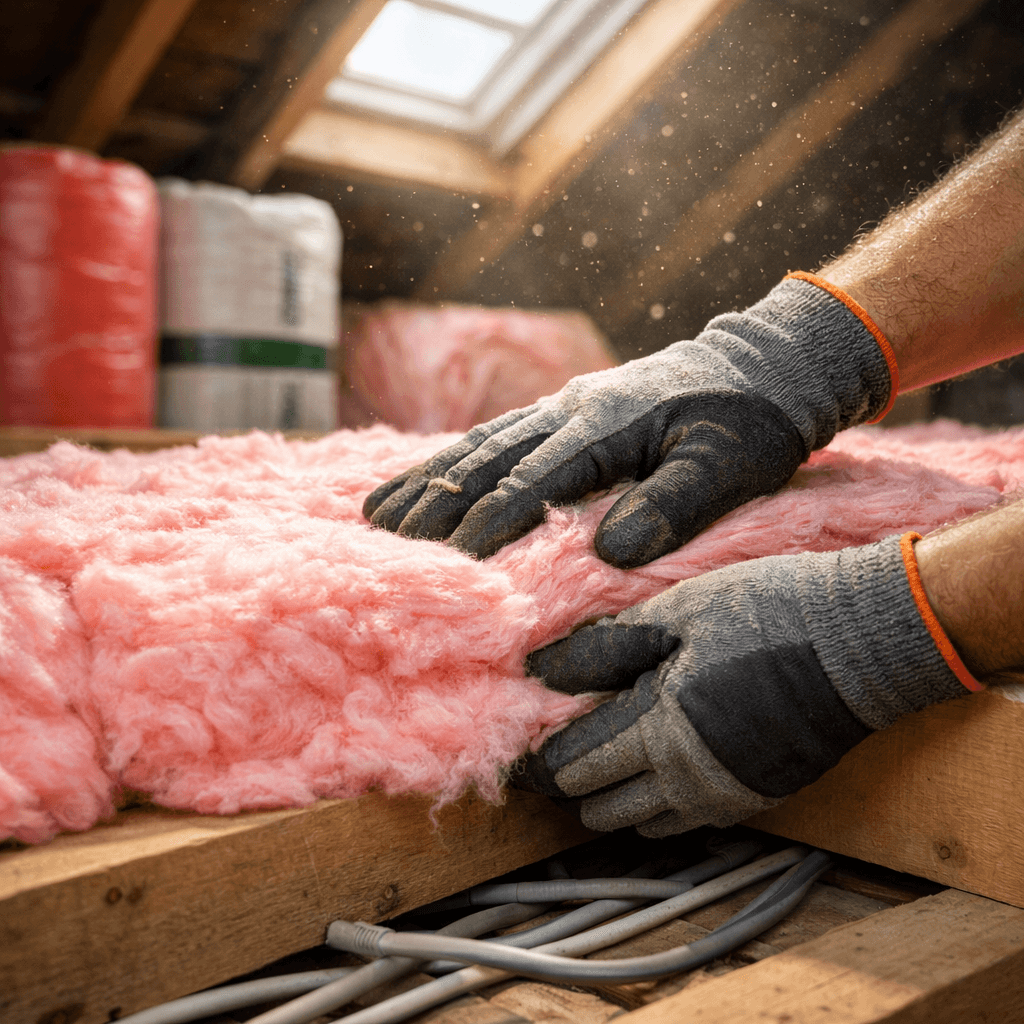
Glass wool and rock wool remain the most widely used insulation materials in UK homes. Affordable, fire-resistant, and relatively easy to handle, mineral wool comes in rolls for loft insulation and batts for wall applications. It is effective, widely available, and suitable for DIY installation in lofts.
The main drawback is that mineral wool loses effectiveness when compressed or damp. It also requires protective equipment during installation due to skin and respiratory irritation from fibres.
Rigid Foam Boards
Polyisocyanurate, polyurethane, and polystyrene boards offer higher thermal performance per thickness compared to mineral wool. This makes them ideal where space is limited, such as internal wall insulation or flat roof applications.
These materials are more expensive but provide excellent performance. They work well in situations where you cannot sacrifice too much room space or where specific fire ratings are required.
Spray Foam Insulation
Spray foam has gained popularity but deserves careful consideration. Open-cell and closed-cell varieties offer different benefits, with closed-cell providing better thermal performance and moisture resistance.
However, spray foam has attracted controversy. Some mortgage lenders and surveyors express concerns about its use, particularly in loft spaces where it can mask roof defects, affect ventilation, and make future inspections difficult. If considering spray foam, research thoroughly and ensure any installer provides proper guarantees and documentation.
Natural and Sustainable Options
Sheep's wool, cellulose from recycled paper, wood fibre, and hemp-based products offer environmental benefits alongside solid thermal performance. These materials appeal to homeowners seeking lower carbon footprint solutions and can be particularly appropriate in conservation areas or period properties.
Natural insulation often handles moisture better than synthetic alternatives, breathing with seasonal changes rather than trapping dampness. Costs tend to be higher, but many homeowners find the environmental credentials worth the premium.
Room-by-Room Insulation Priorities
Different areas of your home present unique insulation challenges and opportunities. This section helps you prioritise based on impact and practicality.
Loft and Roof Space
Loft insulation offers the best return on investment for most UK properties. If you have an accessible, unused loft with joists visible, adding insulation is straightforward and often suitable for confident DIY homeowners.
Lay insulation between and across joists to minimise thermal bridging. Remember to insulate the loft hatch, lag any water pipes and tanks, and ensure adequate ventilation around the eaves. Avoid blocking soffit vents, which prevent condensation problems.
For loft conversions, insulation must go between and below rafters, maintaining the roof structure's breathability whilst preventing heat loss. This work typically requires professional input to ensure building regulations compliance and effective performance.
External Walls
Cavity wall insulation involves injecting insulating material through small holes drilled in external walls. This work requires professional installation but typically costs between £500 to £1,500 for a semi-detached property and can be completed in a day.
Solid wall insulation presents a bigger undertaking. External wall insulation wraps your home in insulating material covered with protective render, changing your property's external appearance significantly. Internal wall insulation applies insulating boards to interior wall surfaces, reducing room sizes but avoiding external changes.
Properties in conservation areas or listed buildings across Berkshire and Buckinghamshire may face restrictions on external insulation, making internal solutions the only viable option.
Windows and Doors
Whilst double glazing is standard in modern homes, many older properties retain single-glazed windows, particularly in period features like sash windows. Secondary glazing offers a less invasive alternative that preserves original frames whilst improving thermal performance.
Draught-proofing around windows and doors delivers quick, affordable improvements. Self-adhesive foam strips, brush seals, and letter box covers all reduce air infiltration without significant expense or disruption.
Floors
Ground floor insulation is often overlooked but can make noticeable differences to comfort. Suspended timber floors can have insulation fitted from below if there is crawl space access, or from above if replacing floor coverings anyway.
Solid floors are harder to insulate without raising the floor level, affecting door clearances and step heights. Insulated carpets and underlays offer modest improvements without structural changes.
Understanding Insulation Performance and Ratings
Making sense of insulation specifications helps you compare products and understand what you are getting for your money.
U-Values
U-values measure how effectively an element resists heat transfer. Lower U-values indicate better insulation performance. Current building regulations require walls to achieve U-values of 0.3 W/m²K or better, roofs around 0.16 W/m²K, and floors approximately 0.25 W/m²K.
Older properties often have U-values several times higher than these targets. A solid brick wall without insulation might have a U-value of 2.0 W/m²K or more, explaining why such walls feel cold to the touch in winter.
R-Values and Thermal Conductivity
R-values measure thermal resistance and work opposite to U-values, with higher numbers being better. Thermal conductivity, measured in W/mK, indicates how readily a material conducts heat. Lower conductivity means better insulation performance.
These figures help you compare materials accurately. A thinner layer of high-performance insulation might match the effectiveness of a thicker traditional option, which matters when space is limited.
Practical Performance Factors
Laboratory ratings do not always translate directly to real-world performance. Installation quality significantly affects outcomes. Gaps, compression, and moisture can dramatically reduce effectiveness regardless of the material's theoretical properties.
Thermal bridging, where heat bypasses insulation through structural elements like wall ties or timber frames, also affects overall performance. Proper installation addresses these weak points to maximise benefits.
Typical Costs and Potential Savings
Understanding costs helps you plan realistic budgets and evaluate whether professional quotes seem reasonable. Prices vary based on property size, access, existing conditions, and material choices.
Insulation Cost Guide
| Insulation Type | Typical Cost Range | Potential Annual Savings |
|-----------------|-------------------|-------------------------|
| Loft insulation (DIY) | £250 to £400 | £200 to £300 |
| Loft insulation (professional) | £400 to £700 | £200 to £300 |
| Cavity wall insulation | £500 to £1,500 | £150 to £250 |
| Solid wall insulation (external) | £8,000 to £15,000 | £300 to £500 |
| Solid wall insulation (internal) | £5,000 to £10,000 | £300 to £500 |
| Floor insulation | £500 to £1,500 | £50 to £100 |
| Draught-proofing | £100 to £300 | £50 to £100 |
These figures represent typical ranges for average-sized homes in the South East. Larger properties, difficult access, or premium material choices will increase costs. Savings depend on your current energy usage, heating system efficiency, and fuel prices.
Government schemes occasionally offer grants or subsidised insulation, particularly for households meeting certain criteria. The Energy Company Obligation programme requires energy suppliers to help fund improvements for eligible homeowners, whilst local authority schemes sometimes provide additional support.
DIY Insulation Projects You Can Tackle

Many insulation improvements suit capable DIY homeowners, saving money whilst giving you control over materials and quality.
Loft Insulation Top-Up
Adding extra insulation to your existing loft provision is straightforward if you can safely access the space. Ensure you have adequate lighting, proper boards to walk on, and protective equipment including dust mask, gloves, and long sleeves.
Lay new insulation perpendicular to existing layers, crossing joists to reduce thermal bridging. Do not compress the material, as this reduces its effectiveness. Leave ventilation paths clear and do not cover electrical cables or recessed light fittings without proper fire-rated enclosures.
Draught-Proofing
Sealing gaps around windows, doors, and other openings offers quick wins. Self-adhesive foam strips work well for compression gaps, whilst brush strips suit sliding sash windows. Silicone sealant fills gaps around frames where they meet walls.
Do not seal rooms completely, as some ventilation is necessary for healthy indoor air quality and preventing condensation. Trickle vents in windows, airbricks, and extractor fans should remain clear.
Pipe and Tank Lagging
Insulating hot water pipes and tanks prevents heat loss and protects against freezing. Foam tube insulation slips over accessible pipework easily, whilst tank jackets wrap around hot water cylinders. These simple measures can save £20 to £50 annually on water heating costs.
Radiator Reflector Panels
Installing reflective panels behind radiators on external walls directs more heat into the room rather than warming the wall behind. These cost just a few pounds per radiator and take minutes to fit, offering modest but immediate benefits.
When to Consult a Professional
Some insulation work genuinely requires professional expertise, equipment, or certification. Knowing when to seek help protects both your investment and your property.
Cavity wall insulation must be installed by registered professionals using approved techniques. Incorrect installation can cause dampness problems, particularly in exposed locations or with certain wall constructions. Reputable installers will survey your property first, identifying any factors that make cavity insulation unsuitable.
Solid wall insulation involves complex considerations around thermal bridging, moisture management, and often structural modifications. Building regulations apply, and poor installation can cause serious problems. This work almost always requires professional involvement.
Spray foam insulation, if you decide it is appropriate for your situation, should only be installed by experienced contractors who understand ventilation requirements and provide proper documentation. Given ongoing industry concerns, choose installers carefully and ensure they carry appropriate insurance.
Roof and rafter insulation in loft conversions must meet building regulations and typically requires professional installation to ensure compliance. Fire safety, ventilation, and structural considerations all apply.
If you notice existing insulation problems such as dampness, mould, or collapsed cavity fill, professional assessment helps identify the cause before remediation. Simply adding more insulation over problematic existing materials rarely solves underlying issues.
Seasonal Considerations for Berkshire and Buckinghamshire Homes
The climate across Berkshire and Buckinghamshire presents particular challenges that affect insulation priorities. Whilst the South East enjoys milder winters than northern regions, temperature variations and seasonal moisture still impact homes significantly.
Clay soils common across both counties expand and contract with moisture changes, affecting foundations and potentially causing movement in older properties. This ground movement can open gaps around floors and walls that compromise insulation effectiveness over time. Regular checks around skirting boards and floor edges help identify developing problems.
Summer overheating affects many well-insulated modern homes, particularly those with large south-facing windows. Insulation works both ways, keeping heat out as well as in, but requires complementary measures like effective ventilation, shading, and thermal mass to manage summer temperatures comfortably.
The relatively sheltered location compared to coastal or exposed upland areas means cavity wall insulation suits most properties in these counties. More exposed buildings on high ground may require additional assessment to ensure moisture does not penetrate through wind-driven rain.
Common Insulation Questions Answered
How do I know if my cavity walls are already insulated?
Check your Energy Performance Certificate, look for filled drill holes in external brickwork, or request a borescope inspection from an insulation company. Many offer free surveys to assess current insulation status.
Will insulation make my home too airtight?
Modern homes benefit from controlled ventilation alongside good insulation. Excessive airtightness without mechanical ventilation can cause condensation and air quality problems. Balance draught-proofing with maintaining adequate ventilation through trickle vents, extractor fans, and occasional window opening.
Is it worth insulating a home I might sell soon?
Improved energy ratings can boost property values and make homes more attractive to buyers. An Energy Performance Certificate showing better insulation often supports asking prices, particularly as energy costs remain a buyer concern.
Can I insulate a listed building?
Listed buildings can be improved but require careful approaches that respect historic fabric. Internal insulation using breathable materials often works where external changes are prohibited. Consult your local conservation officer before undertaking work, as unauthorised alterations can create legal problems.
How long does insulation last?
Quality insulation properly installed should last the lifetime of a building. However, problems like water damage, pest infestation, or settlement can reduce effectiveness over time. Periodic checks, particularly in loft spaces, help identify any deterioration before it becomes serious.
Should I insulate before or after other improvements?
Generally, insulate before upgrading heating systems. A well-insulated home needs less heating capacity, potentially allowing you to specify a smaller, more efficient boiler or heat pump. This saves money upfront and improves running efficiency.
What is the most cost-effective insulation improvement?
For most homes, loft insulation tops up offers the best return. The combination of low cost, DIY suitability, and significant heat loss reduction makes it the logical starting point before tackling more expensive improvements.
Making an Insulation Plan for Your Home
Approaching insulation systematically yields better results than tackling improvements randomly. Start by understanding your current position through the assessments described earlier, then prioritise based on impact and budget.
Consider these steps as a framework:
First, address any existing problems like dampness or failed insulation. Adding new materials over problems simply buries issues that will resurface later.
Second, tackle the easiest high-impact improvements. Loft insulation top-ups and basic draught-proofing deliver quick wins that improve comfort immediately whilst you plan larger projects.
Third, consider walls as your next priority, since they represent the largest heat loss pathway. Cavity insulation offers excellent value where suitable, whilst solid wall insulation requires more careful cost-benefit analysis given higher investment requirements.
Fourth, address floors and remaining details. These improvements offer smaller individual savings but contribute to overall comfort and efficiency.
Finally, reassess your heating needs once insulation improvements are complete. A well-insulated home may perform efficiently with lower heating capacity, opening options for more sustainable heating technologies.
Taking the Next Step
Understanding your home's insulation gives you power to make informed decisions about improvements. Whether you tackle projects yourself or work with professionals, this knowledge helps you evaluate options, spot potential problems, and maintain your property's thermal performance over time.
Every home is different, and what works for one property may not suit another. Take time to assess your specific situation, consider your budget and priorities, and plan improvements that make sense for your circumstances.
If you need help connecting with trusted professionals for insulation work or other home maintenance needs, Home+ can help you find qualified trades who understand the specific requirements of properties in your area. Our platform makes it straightforward to get advice and quotes from vetted professionals who can help you create a warmer, more efficient home.
Top Tip:
This guide was researched and structured with AI assistance and reviewed for accuracy by our editorial team.